

How We Work:
Key Design Elements
Key Design Elements
(click + to open, – to close)
Acoustic Design and Soundscapes
Acoustic Design & Soundscapes
At Brick & Moss, we work with leading acoustic experts to deliver the highest level of professional sound design in residential projects.
Why Acoustic Design & Soundscapes Matter?
Sound shapes how we feel, think, and rest. Poor acoustics increase stress, disrupt sleep, and reduce focus.
Sound is an invisible yet powerful layer of design that shapes mood, focus, rest, and social connection.
Carefully designed home soundscapes reduce disruptive noise, introduce natural sounds at the right moments, and use silence strategically, creating environments that support mental clarity, relaxation, and emotional balance.
How We Design Sound
We start by understanding how you experience sound in each space.
Acoustic strategies may be integrated into the building fabric, floor, walls, external envelope, landscape, to control unwanted noise or implemented using advanced, science-based soundscaping systems. These systems dynamically adjust audio in real time according to activity, time of day, occupancy, geolocation and personal preferences.
Biophilic & Circadian Benefits
Nature-inspired sounds evolve throughout the day, supporting the body’s circadian rhythms and reinforcing the home’s connection to the natural world. This alignment promotes alertness, restorative sleep, and energy.
Connection to Nature
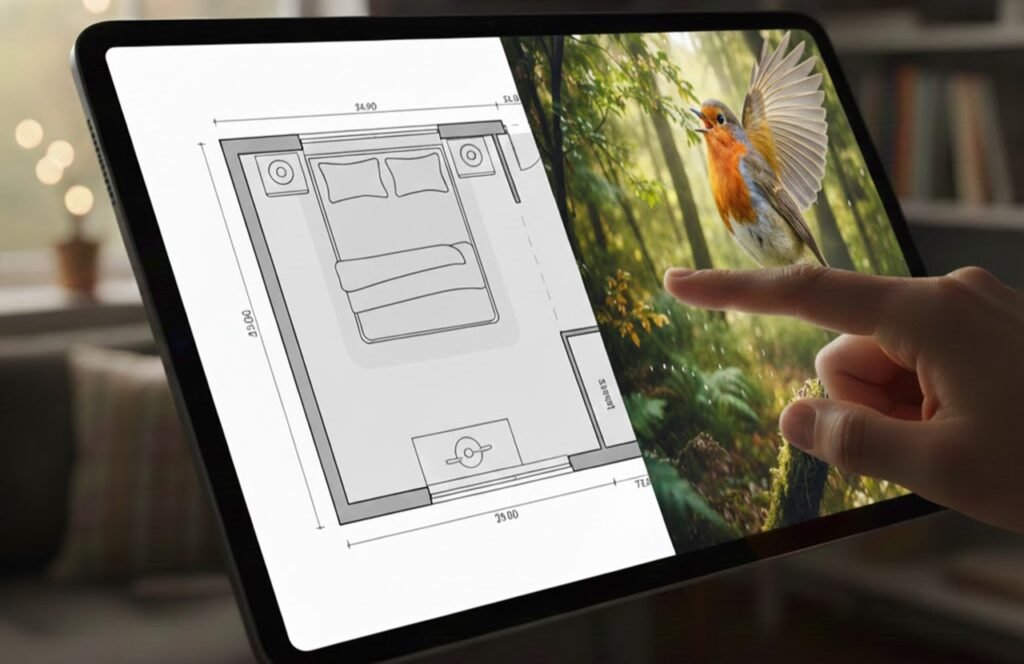
Connection to Nature
What is biophilic design ?
Humans are deeply connected to nature, yet modern homes often separate us from it. Biophilic design restores this essential link and positively influences how we think, feel, and function.
What Are the Health and Wellbeing Benefits of Biophilic Design in Homes and Interiors ?
Scientific research shows that biophilic design can significantly improve wellbeing. By bringing natural elements, light, shapes and materials into interior spaces, homes can help reduce stress, improve mood, and restore mental energy, while also enhancing concentration, creativity, and mental clarity.
Natural colours, textures, and materials further support emotional comfort and a stronger sense of connection to nature.
How Biophilic Design Is Applied in Residential Homes ?
Visual Connection to Nature
Views toward gardens, trees, and landscapes reduce stress and improve mood and cognitive performance.
Indoor Greenery and Living Systems
Plants, indoor gardens, and green walls introduce living elements that purify air and soften interiors. Also, living elements introduce life and seasonal variation.
Natural Light and Daylight Maximisation
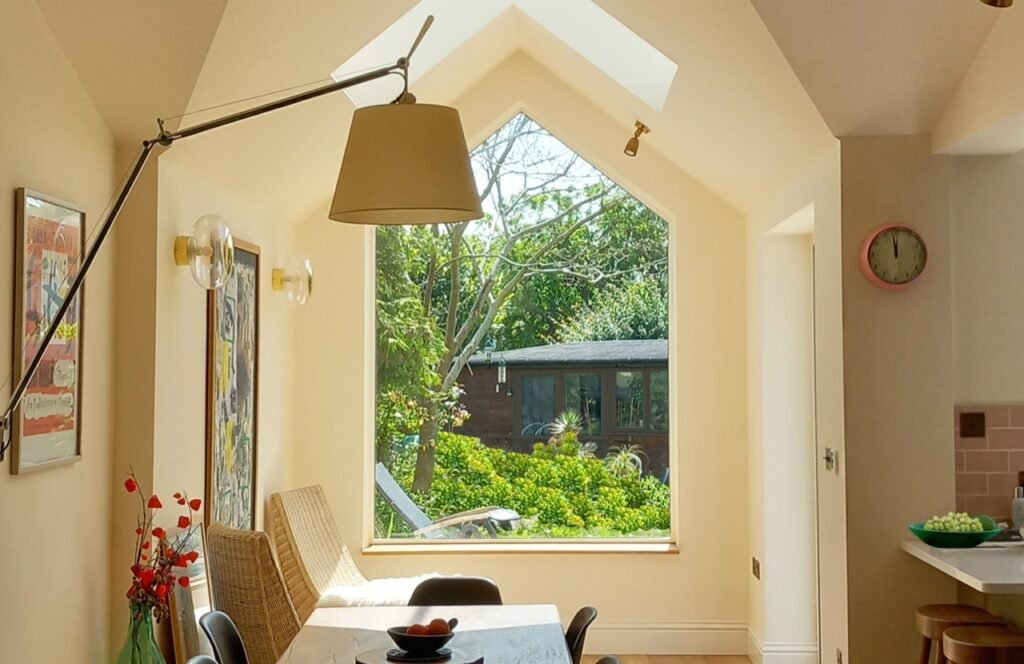
Large openings, skylights in a room, and thoughtful layouts maximise daylight and reconnect interiors with the natural cycle of the day. Natural light exposure supports circadian rhythms, improving sleep, energy, and mood.
Circadian Lighting
Lighting is designed to support the body’s circadian rhythm, the natural 24-hour biological cycle that regulates sleep, alertness, hormones, and energy. By aligning natural and artificial light with this rhythm, homes can improve sleep quality, focus, and overall wellbeing.
Natural Materials, Colours and Textures
Wood, stone, natural fibres, and organic textures create warmth, grounding interiors in nature while providing tactile comfort.
Custom textiles, like throws, or bed linens can be created for individual clients to enhance comfort and personal connection.
Sound and biological rhythms
Acoustics are carefully shaped working on the building envelope to reduce disruptive noise and introduce natural sounds from outside, supporting biological rhythms.
When modifying the building fabric or walls isn’t possible, specialised equipment can create dynamic, nature-inspired audio environments. These systems align with the body’s circadian rhythm by processing inputs such as time of day, geolocation, and light levels, ensuring sound evolves naturally to reinforce calm, restoration, and a deeper connection to nature.
Natural Fragrances and Aromatherapy
Subtle scents created from local natural plant sources enhance emotional wellbeing and strengthen the sensory connection to nature.
Indoor–Outdoor Spatial Flow
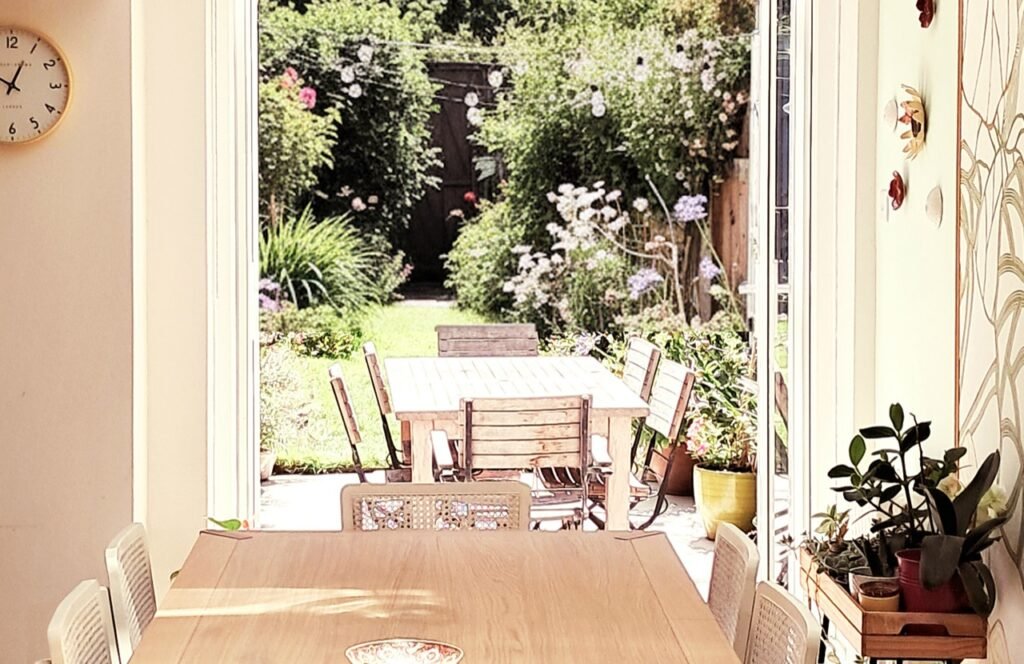
Layouts blur the boundary between interior and exterior spaces through terraces, courtyards, and visual continuity.
Air Quality and Natural Ventilation
Biophilic design encourages natural airflow and the use of healthy, non-toxic materials, creating indoor environments that feel alive and connected to nature. Proper ventilation and breathable spaces not only improve air quality and physical wellbeing but also let occupants experience the rhythms and freshness of the natural world, reinforcing our innate connection to it.
Nature-Inspired Forms and Biomimicry
Design increasingly looks to biomimicry. Biomimicry is the practice of learning from and emulating nature’s strategies, forms, and processes to solve human design challenges. In residential interiors, it can inspire energy-efficient layouts, natural ventilation, material selection, and innovative spatial solutions that work in harmony with the environment. Even when applied at a small scale, biomimicry strengthens our connection to nature.
Natural Patterns and Forms (Biomorphic Design)
Using fractals and organic shapes inspired by nature. Shapes and patterns that mimic natural forms enhance aesthetic pleasure and reduce stress.
Home Fitness & Wellness
Home Fitness & Wellness
Thoughtfully designed homes can make physical wellbeing an effortless part of everyday life.
At Brick & Moss, we integrate spaces and solutions that encourage movement, stretching, meditation, and mindful activity, seamlessly woven into your home’s rhythm.
Why It Matters
Regular movement and mindful exercise support physical health while boosting mood, focus, and emotional balance.
For example, a morning yoga corner by a sunlit window can start the day with energy and calm, a discreet stretching area in the living room encourages micro-workouts throughout the day, and a multifunctional meditation nook helps you unwind in the evening.
Homes designed for wellbeing make these healthy habits easy to maintain, fitting seamlessly into daily routines without disrupting life.
How We Design Fitness into Your Home
Activity Zones
Discreet, purpose-built areas for exercise, stretching, yoga, or meditation, carefully positioned to blend naturally into daily living.
Flexible Living
Spaces that adapt effortlessly between activity, rest, and routine, so that movement integrates seamlessly into your home’s flow.
Transformative Furniture
Multifunctional pieces that open, fold, or reconfigure, creating exercise or meditation zones without compromising style or comfort.

Intuitive Smart Layout
Intuitive and Smart Layouts
The way a home is organised has a profound impact on how we think, move, and feel within it.
Research in environmental psychology and neuroscience shows that spatial layout influences navigation, cognitive effort, and emotional responses.
Specific brain regions are responsible for interpreting spatial geometry and environmental context, helping us understand where we are and how to move through space.
When layouts are confusing or fragmented, the brain must work harder to interpret the environment.
Clear, legible spatial organisation reduces cognitive load, allowing people to move naturally and experience the home with greater comfort and ease.
Why Spatial Organisation Matters
Humans instinctively seek environments that are easy to understand and navigate. Clear spatial relationships and visual connections help the brain quickly interpret the layout of a space, creating a sense of orientation, openness, and calm.
When circulation flows naturally and rooms are organised around daily activities, the home feels intuitive rather than demanding mental effort. This improves comfort, reduces stress, and supports everyday wellbeing.
How We Design Intuitive Layouts
At Brick & Moss, spatial organisation begins with understanding how people move through their home and how daily routines unfold.
Layouts are reorganised to align with natural movement patterns, creating clear circulation paths and visual connections between spaces.
Strategic openings and sightlines enhance spatial depth and orientation, making the home easier to understand and navigate.
We balance openness with moments of retreat, combining connected social spaces with quieter areas that support rest, focus, and privacy.
Storage and functional zones are organised around everyday rituals, ensuring essential items are accessible and logically placed.
Underused areas are often transformed into purposeful spaces that improve the overall flow and usefulness of the home.
Custom Home Scents
Custom Home Scents
Why Scent Matters
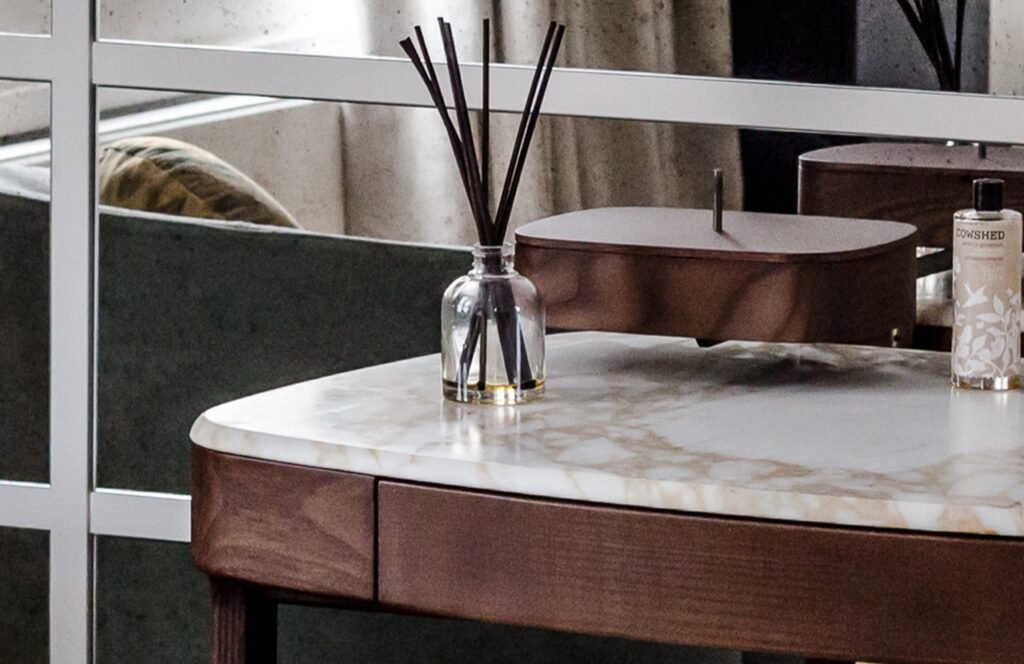
Scent is the first impression of a home and a powerful influence on mood, emotion, and wellbeing. Carefully designed aromas enhance the atmosphere of each space, evoke feelings, and create a sense of comfort, familiarity, and personal expression.
Scent enhances other sensory elements of the space; for instance, every colour suggests a scent, and every scent deepens the experience of colour
Scent has both therapeutic and emotional power, supporting relaxation, focus, and emotional balance.
In combination with light, colour, and texture, bespoke fragrances deepen the overall sensory experience of your home.
How We Work With Scent
Brick & Moss collaborates with leading natural fragrance specialists to design unique, home-specific aromas.
Each scent is crafted from high-quality aromatherapy ingredients and tailored for different rooms, activities, and seasons.
The process goes beyond creating a pleasant smell, it defines the mood, reflects your personality, and enhances your emotional connection to the space.
Our holistic approach begins with a conversation and detailed brief to develop the scent profile, intention, and functional purpose.
Advanced guidance ensures each creation is safe, natural, and compliant with industry standards.
Lighting and Colours
Optimized Natural and Artificial Lighting and Colours
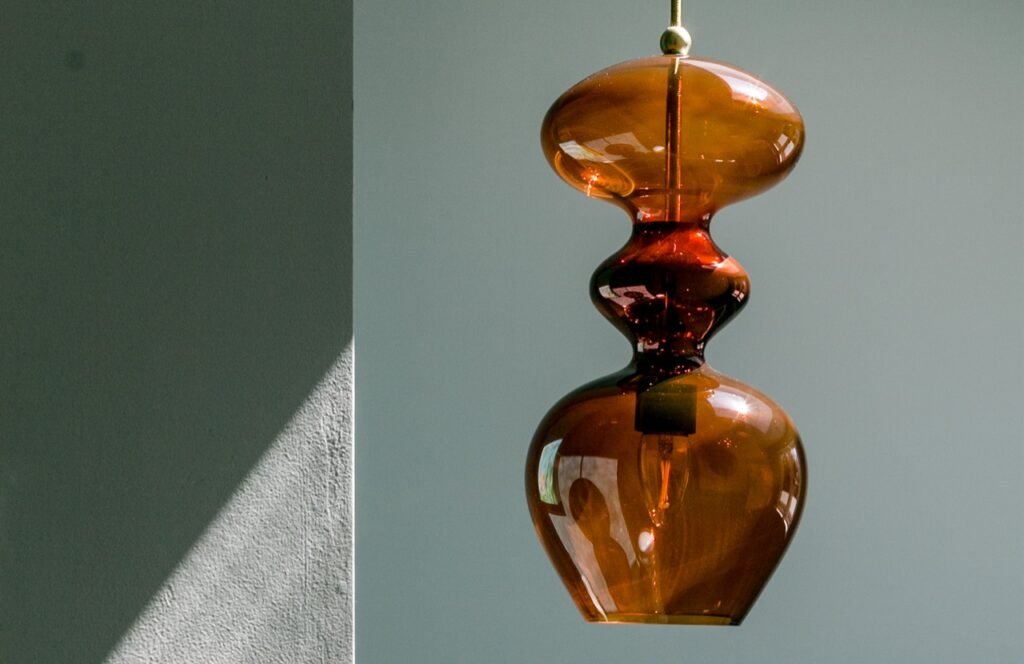
Light and colour are the soul of a space.
Their coordinated design profoundly influences how we feel, function, and experience our home. Scientific research shows that light affects neural processes, emotional states, cognitive performance, and circadian rhythms, the internal biological clock that regulates sleep, energy, and hormonal balance.
At Brick & Moss, lighting is designed not only for visual comfort, but as a powerful environmental factor that supports wellbeing, focus, and restorative rest.
Why Light Matters
Natural light is one of the most powerful regulators of human health and cognition. Exposure to daylight influences hormone production, stimulating serotonin, which supports mood and energy, while helping regulate melatonin, the hormone responsible for healthy sleep cycles.
Scientific studies highlight the profound effects of daylight on cognitive performance and wellbeing and demonstrate that the quality and distribution of light, not simply its quantity, strongly influence how the brain processes space. For this reason, thoughtful daylight design is not simply an aesthetic choice but a fundamental architectural strategy to support health, mental performance, and everyday wellbeing.
Circadian Rhythm and Human-Centric Lighting
The body’s circadian rhythm is a 24-hour biological cycle that regulates sleep-wake patterns, hormonal balance, alertness, and energy throughout the day. This system relies primarily on exposure to natural light.
Human-centric lighting systems replicate these natural cycles indoors by adjusting the intensity and colour temperature of artificial lighting during the day.
This dynamic approach aligns the indoor environment with our biologicalrhythms, supporting both mental performance during the day and restorative sleep at night.
How We Work With Light and Colour
Our process begins with a guided creative exploration to understand the colours, materials, light qualities, and spatial atmospheres that resonate most with you.
Because light and colour can only be fully understood in context, we develop physical material boards and lighting tests for key appliances, reviewing them together during the design process and on site. This allows you to experience how light interacts with textures and tones in real conditions, ensuring the final design aligns with your emotional sense of comfort.
Materials & Bespoke Textiles
Selected Materials & Bespoke Textiles
Touch is a fundamental way we experience the world.
When we interact with surfaces, we seek confirmation of what we see and imagine. When expectations are met, touch provides reassurance, comfort, and a sense of emotional safety.
Emerging research shows that tactile texture, the feel of surfaces and materials, activates neural systems linked to comfort, safety, and emotional regulation.
How We Work With Touch
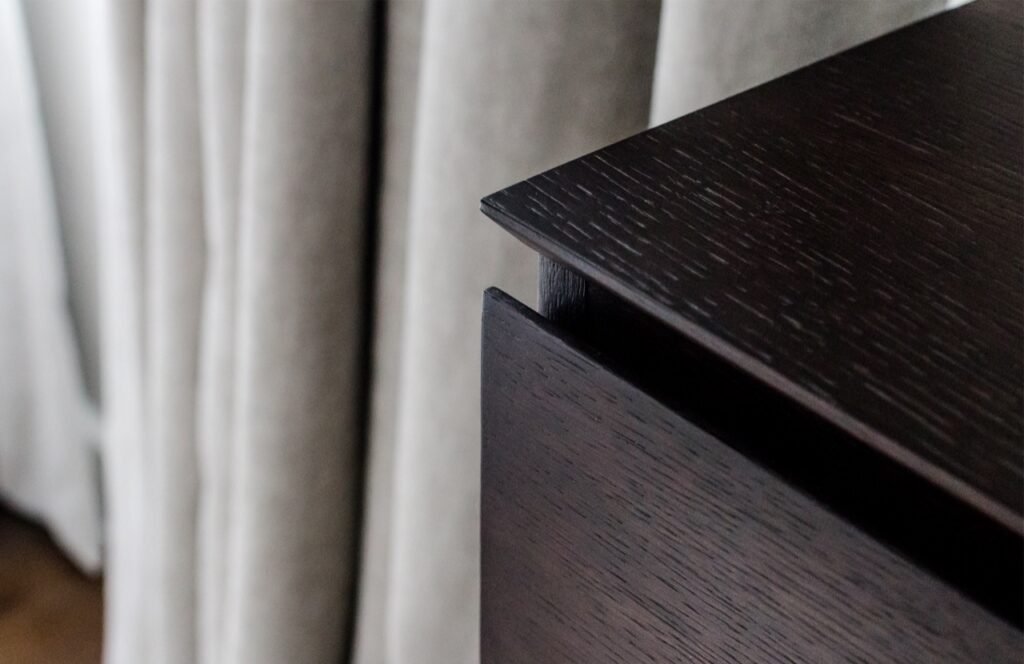
Every shape, surface, and texture is carefully considered to create comfort and tactile satisfaction.
From door handles to cashmere throws, every detail is tested with samples to ensure the desired feel.
We create bespoke linens and throws from scratch, selecting yarns and fabrics to suit weight, texture, and sensory preference.
Tactile materials are chosen to support relaxation, focus, and a deeper connection to natural elements.
Air Quality Thermal Control
Air Quality and Thermal Comfort
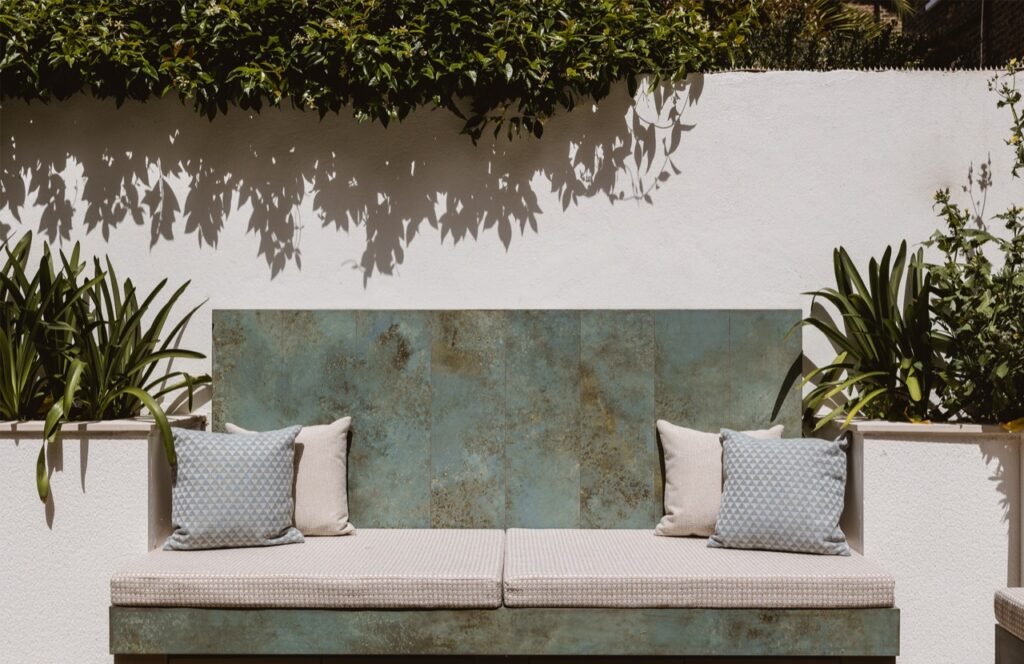
Brick & Moss designs homes where air quality, temperature, and humidity are actively monitored and managed, both through natural ventilation and smart mechanical systems.
Combined with healthy, non-toxic materials for finishes and furniture, this approach supports physical well-being, mental clarity, and effortless daily comfort.
Clean Air & Ventilation
Natural ventilation and intelligent air-quality systems maintain fresh, oxygen-rich indoor air. Healthy, non-toxic materials further reduce pollutants and volatile organic compounds (VOCs), supporting clarity, energy, and overall health.
Thermal Comfort
Smart insulation and temperature regulation ensure a stable indoor climate, keeping spaces comfortable year-round.
Humidity & Environmental Balance
Controlled humidity not only protects health, avoids risk of mold, but also optimizes perceived temperature, ensuring spaces feel naturally comfortable.
Healthy Materials
Flooring, wall coverings and furniture are carefully selected to minimize toxins, off-gassing, and flame retardants, while promoting a safe, sustainable, and wellness-focused home environment.
Notes
Where possible, we avoid flame-retardant chemicals in finishes and furniture, as many are linked to health risks, preferring naturally fire-resistant, non-toxic materials that enhance indoor air quality and wellbeing.
Spaces Shaped by Memory
Spaces Shaped by Memory
Where Wellbeing Begins with What You Love
Homes become meaningful when they reflect the stories of the people who live in them. Objects that have accompanied us over time create a sense of continuity, comfort, and belonging.
Rather than replacing everything with the new, we value what already exists, antiques, collected finds, heirlooms, and possessions that hold personal meaning. These elements carry memories and emotional significance that enrich the atmosphere of a home.
Through careful restoration, thoughtful placement, and sensitive reinvention, these pieces are integrated into the design, allowing the space to feel authentic, grounded, and true to its inhabitants.
Why Memory Matters in Design
Research in environmental psychology shows that familiar objects and meaningful environments contribute to emotional stability and a stronger sense of identity. Spaces that reflect personal history can reduce stress, enhance comfort, and foster a deeper connection between people and their surroundings.
When a home incorporates elements that hold emotional value, it becomes more than a functional environment, it becomes a place of belonging.
How We Work with Memory
At Brick & Moss, we begin by understanding the objects, collections, and pieces, that matter most to you.
Antiques and heirlooms are restored and reinterpreted when needed
Personal collections are thoughtfully integrated into the spatial narrative
Existing furniture and objects are repositioned or reinvented to suit the new design
Materials, colours, and textures are chosen to complement meaningful pieces
The goal is not simply preservation, but transformation, allowing familiar objects to coexist harmoniously with new design elements.