



Most of us have experienced it.
You walk into a room and instantly feel comfortable. Another room leaves you feeling uneasy, even though you cannot explain why.
We often think that our emotions come entirely from within us. Yet the spaces around us may influence how we feel more than we realise.
Imagine sitting in a café with warm lighting, natural materials and a view of trees outside. Now compare that with a windowless room lit by harsh artificial light. Even before you have formed a conscious opinion, your brain is already responding to the environment.
This response is not simply a matter of personal taste.
For decades, researchers have studied the relationship between people and their surroundings. Their findings suggest that our brains constantly gather information from the environment, assessing comfort, safety and wellbeing, often without us being aware of it.
Light is one of the strongest influences. Natural daylight helps regulate our body clock, affecting mood, concentration and sleep. This may explain why bright spaces often feel uplifting, while darker environments can leave us feeling tired or subdued.
The layout of a space matters too. Rooms that are easy to understand and move through tend to feel calmer. Spaces that are cluttered, confusing or disconnected can create subtle stress, even if we cannot immediately identify the cause.
Then there is nature.
Studies have shown that views of greenery can reduce stress and improve wellbeing. A glimpse of trees through a window may seem insignificant, yet it can influence how a space feels. Many people instinctively seek out parks, gardens and natural landscapes when they want to relax, recover or think clearly.
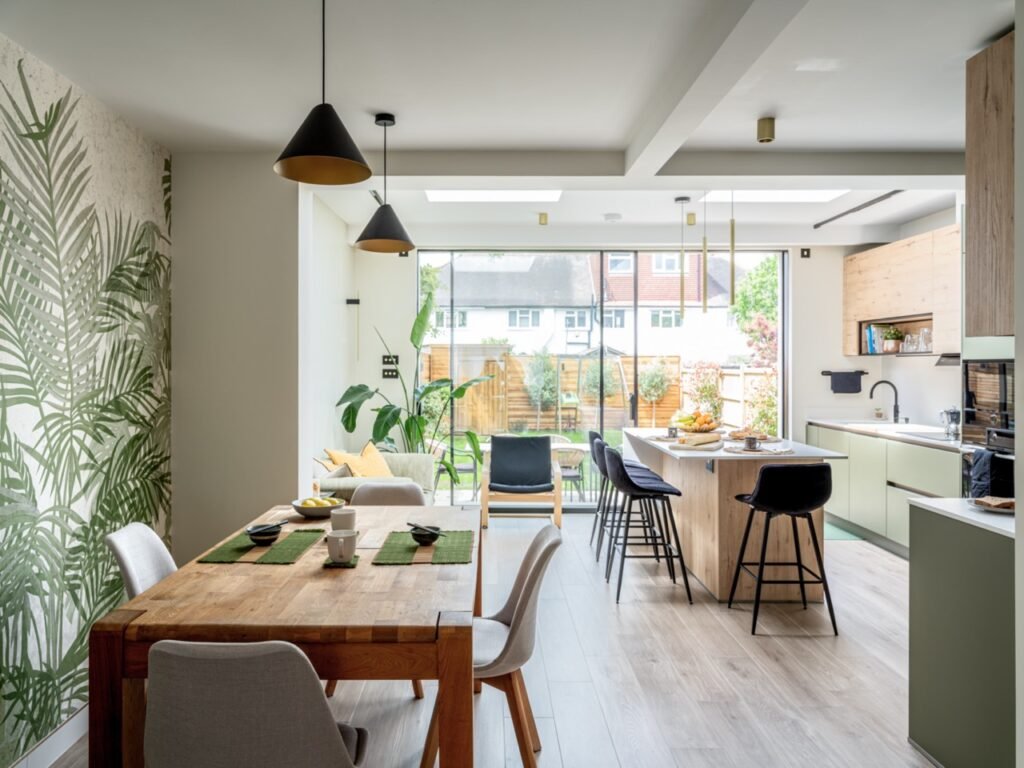
Some researchers believe these preferences may be linked to our evolutionary past. Humans spent most of their history living outdoors, paying close attention to their surroundings. As a result, we often feel most comfortable in places that offer both openness and protection.
Think about your favourite seat in a café. It is probably not in the middle of the room. More likely, it is tucked against a wall, beside a window or overlooking the entrance. Without consciously thinking about it, you may have chosen a place that allows you to observe your surroundings while feeling sheltered yourself.
Materials play a role as well. Timber, stone and natural fibres often create a sense of warmth and comfort that highly synthetic environments struggle to replicate. We experience these qualities not only with our eyes, but through touch, memory and association.
Of course, architecture cannot determine happiness. A beautifully designed room will not solve every problem. Yet the spaces we inhabit can support our wellbeing, reduce stress and shape our daily experience in subtle but meaningful ways.
At Brick & Moss, we believe good design begins with people. Beyond aesthetics, budgets and floor plans lies a simple question: how should a space make someone feel?
Because space is never neutral.
Whether we notice it or not, the places we inhabit are influencing us every day. The most successful spaces are not simply the ones that look good. They are the ones that help us feel good too.